Brewing · Volume 8
Vol 8 — Tier 4: All-Grain Three-Vessel
Tier-3 (Vol 7) made you an all-grain brewer with a bag and a single kettle. Tier-4 is the dedicated multi-vessel system: a hot-liquor tank, a mash/lauter tun, and a boil kettle, with pumps moving wort between them. It’s the classic “real brewery in miniature” rig — bigger batches, no heavy bag to wrestle, traditional sparging, and the repeatability that comes from purpose-built, dedicated hardware.
8.1.1 What Tier-4 Means
A three-vessel system splits the all-grain process across three dedicated vessels (Vol 3 §3.3–3.5):
- HLT (hot-liquor tank) — heats and holds the strike and sparge water.
- Mash/lauter tun — where the grain mashes and the wort is filtered through a false bottom or manifold.
- Boil kettle — where the collected wort boils with hops.
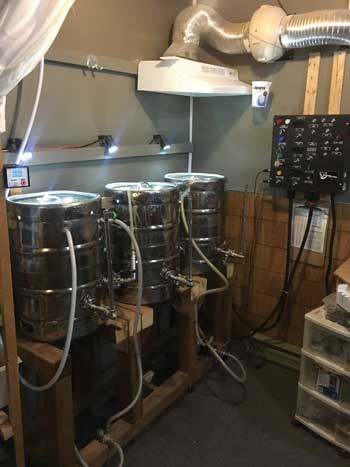
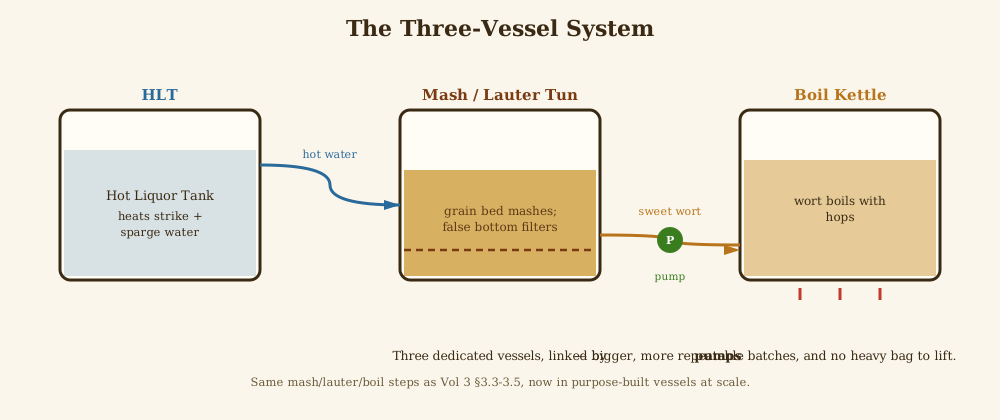
Why move here from BIAB: bigger batches (often 10+ gallons), no heavy wet bag to hoist, true fly sparging for a touch more efficiency, and the repeatability of a fixed, dedicated setup. It’s also where batch sizes begin their climb toward commercial:
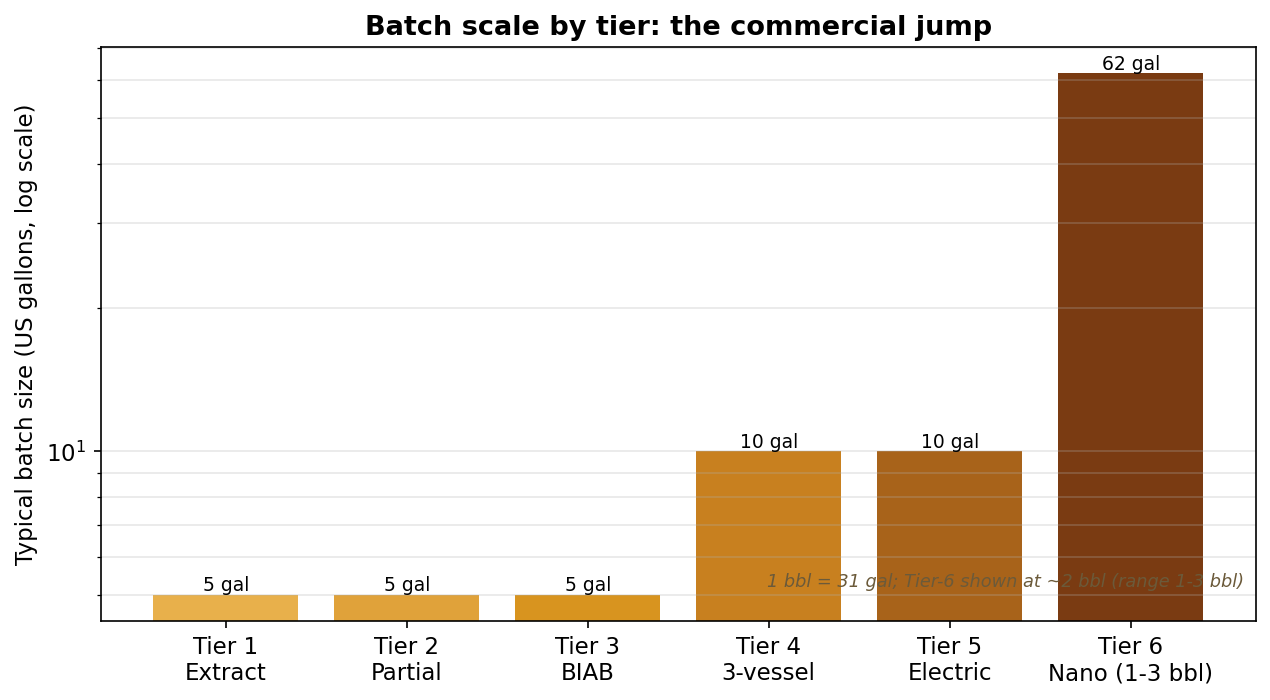
What it asks: more space, more vessels, and pumps + plumbing to move hot liquid safely.
8.1.2 The Vendor Landscape
Four paths, from cheap DIY to premium stainless. (Prices approximate, 2026.)
- Path A — DIY cooler 3-vessel (cheapest). Two insulated drink coolers (HLT + mash/lauter tun, with a false bottom or stainless braid) plus your existing kettle, valves, and a pump: ~$300–500 all-in. The classic budget multi-vessel build.
- Path B — Stainless modular system. Spike, SS Brewtech, Blichmann, or BrewBuilt sell matched stainless vessels you can buy piecemeal or as a brewhouse: ~$1,500–3,500+. Durable, beautiful, scalable, and the basis for an electric upgrade later.
- Path C — Pumps. A Chugger or March magnetic-drive pump (
$90–150) or a Blichmann Riptide ($250–350). One pump suffices; two make transfers seamless. - Path D — 2-vessel RIMS hybrid. The Blichmann BrewEasy combines BIAB-style recirculation with a mash/boil pair (no separate HLT) — a simpler stepping-stone that also points toward Tier-5’s electric recirculation (Vol 9).
8.1.3 Costed Bill of Materials
Incremental over the Tier-2/3 kit (Vols 6–7). Prices approximate, 2026.
Table 1 — 8.3 Costed Bill of Materials
| Item | ~Price |
|---|---|
| HLT (10-gal cooler, or stainless) | $80–300 |
| Mash/lauter tun + false bottom or manifold | $80–300 |
| Boil kettle (10–15 gal, if upgrading) | $150 |
| Brewing pump (Chugger / March) | $120 |
| High-temp silicone hose + camlocks/valves | $80 |
| Burner stand / second burner | $50–100 |
| Chiller, fermenter, temperature control | carried over |
| Incremental subtotal — DIY cooler build | ~$400–650 |
| Stainless modular system | ~$1,500–3,500+ |
8.1.4 Assembly and Setup
- Vessel layout. Either gravity-fed (HLT high, kettle low) or, more commonly, pumped between vessels on one level. Plan the bench/stand and hose routing before brew day.
- Filtration. Fit the mash tun with a false bottom or a stainless braid/manifold so it lauters cleanly (Vol 3 §3.4).
- Pump plumbing. Use food-grade high-temp silicone hose and camlock quick-connects; mount the pump below the source so it stays primed (mag-drive pumps don’t self-prime well).
8.1.5 Step-by-Step Brew Day
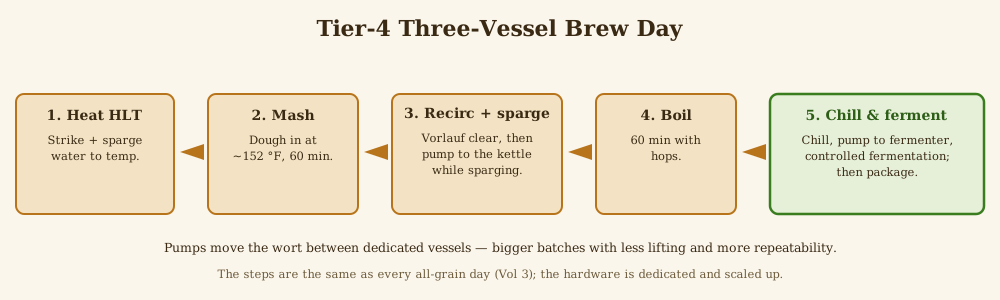
-
Heat the HLT. Bring strike and sparge water to temperature in the hot-liquor tank.
-
Mash. Transfer strike water to the mash tun, dough in the grain, and rest at ~152 °F for 60 minutes (Vol 3 §3.3).
-
Recirculate (vorlauf). Gently pump the cloudy first runnings from the bottom of the mash tun back to the top until the wort runs clear and a filter bed sets (Vol 3 §3.4).
-
Sparge to the kettle. Run the wort to the boil kettle while sprinkling 168–170 °F sparge water from the HLT over the bed — fly sparge (continuous) — or drain, add a batch of water, and drain again — batch sparge.
-
Boil, chill, ferment. Boil 60 minutes with the hop schedule (Vol 3 §3.5), chill with the immersion/plate chiller, pump to the fermenter, and ferment under temperature control (Vol 6 §6.4); package as in Vol 5 §5.5.
8.1.6 Common Pitfalls and How to Avoid Them
- Stuck mash (sparge won’t flow). Too-fine a crush or a packed bed clogs the false bottom. Fix: a coarser crush; don’t pump faster than the bed will drain; stir gently if it sets too hard.
- Pump won’t prime / cavitates. Mag-drive pumps need a flooded inlet. Fix: mount the pump below the vessel, open the outlet valve to throttle (never the inlet), and burp air out before running.
- Hot-side hose/valve mix-ups. Three vessels and several valves invite mistakes. Fix: label everything; develop a fixed valve routine; use distinct hoses.
- Scorching while recirculating over flame. Firing the mash tun with little liquid moving scorches wort. Fix: keep flow up while heated, or recirculate gently with low heat.
- Hot-side aeration. Splashing hot wort can cause stale flavors down the line. Fix: keep transfers gentle and submerged.
8.1.7 Where Tier-4 Leaves You; What Tier-5 Adds
At Tier-4 you brew bigger, more consistent all-grain batches on a dedicated rig, with proper sparging and no bag-lifting — a setup that would be at home in a brewing club or a serious garage. The remaining friction is propane, manual temperature management, and the outdoor/ventilation requirement.
Tier-5 (Vol 9) swaps fire for electricity and automation: electric heat with PID control, recirculating RIMS/HERMS or an all-in-one system, programmable step mashes, indoor brewing, and the advanced fermentation techniques (pressure fermentation, kegging, fast lagering) that define a serious hobbyist.
Cross-references: the mash/lauter/sparge science is Vol 3 §3.3–3.4; the gear carried forward is Vols 6–7; Tier-5 electric/automated is Vol 9; the commercial threshold is Vol 10.
Comments (0)