Brewing · Volume 9
Vol 9 — Tier 5: Electric & Automated
Tier-4 (Vol 8) gave you a dedicated three-vessel rig — but still propane-fired, manually managed, and tethered to the outdoors. Tier-5 swaps fire for electricity and control: electric heat with PID/automated temperature holding, recirculating mashes (RIMS/HERMS or an all-in-one system), programmable step mashes, and indoor brewing. It’s also where the fermentation and packaging side levels up — pressure fermentation, kegging, fast lagering — into genuinely pro-style technique.
9.1.1 What Tier-5 Means
Electricity changes the brew day in three ways: heat is precise and automatic (a controller holds your mash and boil targets), brewing moves indoors (no open flame or propane fumes — just a suitable circuit and ventilation for steam), and the process becomes repeatable to the degree (programmed step mashes, logged temperatures). This is the production-cadence tier for the serious hobbyist.
9.1.2 The Vendor Landscape
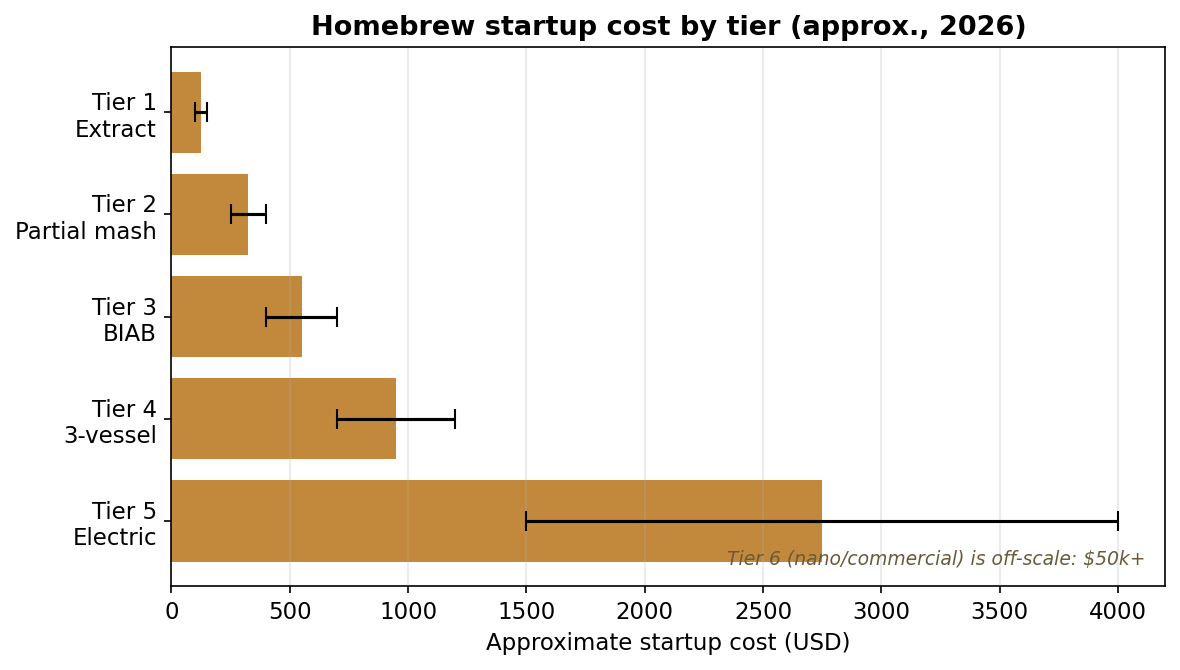
Four paths. (Prices approximate, 2026; check current vendor pricing.)
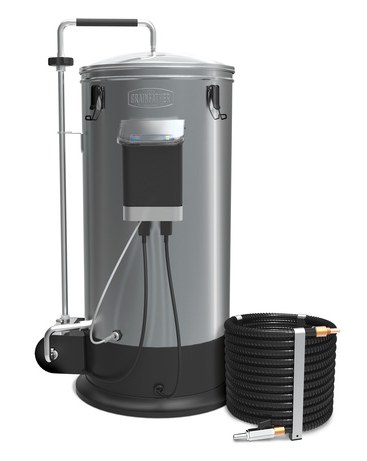
- Path A — All-in-one electric (recommended). An insulated electric kettle with a built-in grain basket and recirculation pump — BIAB made push-button with precise control: Anvil Foundry (
$300–450), BrewZilla Gen 4 35 L ($570), Spike Solo ($750+), Grainfather G40 ($900+). One vessel, indoor, programmable. - Path B — Electric RIMS/HERMS. Convert a Tier-4 three-vessel rig to electric recirculation with a RIMS tube (inline element) or HERMS coil (in the HLT) plus a control panel — DIY or kits, ~$800–2,500. Best if you already own the vessels.
- Path C — Kegging & draft. Corny (Cornelius) kegs (
$80–130 each), a CO₂ tank + regulator ($120), and a kegerator or keezer (chest freezer + collar, ~$300–600). Force-carbonate and serve on tap — no more bottling. - Path D — Fermentation upgrades. A pressure fermenter (FermZilla from ~$99; Spike Flex / stainless conical $300+), a glycol chiller, and/or a dedicated chamber for hands-off temperature control and pressure fermentation.
9.1.3 Costed Bill of Materials
Approximate, 2026. Mix and match by path.
Table 1 — 9.3 Costed Bill of Materials
| Item | ~Price |
|---|---|
| All-in-one electric system (Anvil Foundry → Grainfather) | $300–950 |
| or RIMS/HERMS conversion + control panel | $800–2,500 |
| 240V circuit (or use 120V at lower wattage) | $0–300 (electrician) |
| Kegging system (2 corny kegs + CO₂ + regulator) | $300–450 |
| Keezer/kegerator (chest freezer + collar) | $250–500 |
| Pressure fermenter (FermZilla → stainless conical) | $100–600 |
| Typical Tier-5 spend | ~$700–3,000+ |
9.1.4 Assembly and Setup
- Electrical safety first. Electric brewing combines water and mains power — always run on a GFCI-protected circuit. A 240V/2800W+ element (rapid heat, vigorous boil) needs a proper dedicated circuit; a 120V/1600W element works on a normal outlet but heats slowly. Never improvise mains wiring — use a purpose-built controller/all-in-one or hire an electrician.
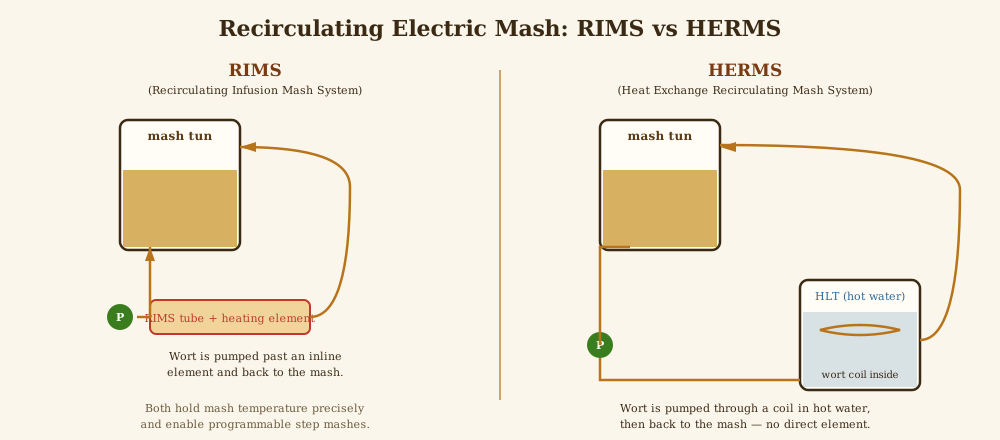
- Recirculation. Set the pump and element so wort recirculates gently through the grain bed; the controller modulates the element to hold each mash step.
- Kegging & pressure setup. Purge kegs and fermenters with CO₂; learn the temperature/pressure relationship for force-carbonation (Vol 3 §3.9).
9.1.5 Step-by-Step Brew Day + Advanced Technique
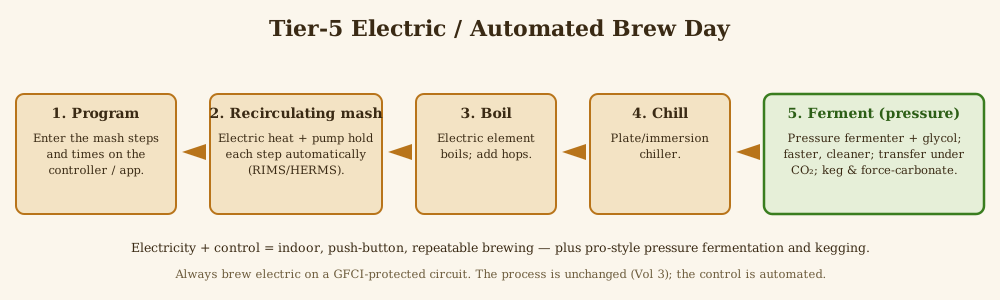
The brew day itself becomes largely push-button: program the mash schedule, dough in, and the system holds each step and recirculates while you prep hops; boil on the element; chill; transfer. The bigger leap at Tier-5 is the advanced repertoire this hardware unlocks:
-
Pressure fermentation. Fermenting under ~10–15 psi suppresses excess esters/fusels (cleaner beer, even warm and fast), lets you transfer and serve under CO₂ (minimal oxidation), and can carbonate the beer as it ferments.
-
Fast & pressure lagering. With glycol/chamber control you can ferment and lager precisely — even warm, pressurized “fast lager” methods.
-
Kegging & force carbonation. Set-and-forget carbonation at a chosen temperature and pressure; serve on tap (Vol 3 §3.9).
-
Water-chemistry mastery. Build water from RO to a target profile for each style (Vol 2 §2.5) — easy to dial in once everything else is controlled.
9.1.6 Common Pitfalls and How to Avoid Them
- Electrical safety shortcuts. The single non-negotiable. Fix: GFCI always; proper circuit for 240V; never hand-wire mains — buy a built system or hire a pro.
- Element scorching / boil-dry. Firing an element not fully submerged scorches wort or burns out. Fix: low-watt-density elements; never energize a dry element; keep it covered.
- Over-trusting automation. A controller holds a number; it doesn’t taste the beer. Fix: still take gravity readings and taste (the repeatability thread — Vol 3 §3.7).
- Chasing gadgets over process. Expensive gear doesn’t fix sloppy sanitation or fermentation temperature. Fix: the fundamentals (Vol 2 §2.4) still decide quality.
9.1.7 Where Tier-5 Leaves You; What Tier-6 Adds
At Tier-5 you can brew any style in this book — indoors, repeatably, with programmable mashes and pro-style pressure fermentation and draft serving. For the vast majority of homebrewers, this is the summit; there is no quality ceiling above it that a hobbyist needs to climb.
Tier-6 (Vol 10) is therefore not “more equipment” so much as a different kind of step — the legal and business threshold of selling your beer: a federal Brewer’s Notice, state licensing, commercial-scale equipment, and the economics of a nano-brewery. It’s the brewing analog to going pro.
Cross-references: the process is Vol 3; fermentation biology and water are Vol 2 §2.4–2.5; the dedicated vessels you may be electrifying are Vol 8; the commercial/legal threshold is Vol 10.
Comments (0)